True crime podcasts are everywhere these days, and honestly, I can’t get enough. There’s something so gripping about hearing these wild stories unravel, piece by piece. If you’re already hooked or just curious about where to start, I’ve got you covered with some of the best true crime podcasts out there.
1. RedHanded
First up, my top pick: RedHanded with Hannah Maguire and Suruthi Bala. This podcast is an absolute gem. These two are a dream team, bringing you deep dives into some of the most fascinating true crime cases. They’re hilarious, razor-sharp, and they’ve got this incredible knack for balancing grim topics with just the right amount of humour.
From high-profile cases to totally obscure ones, Hannah and Suruthi go all in with top-notch research and thoughtful discussions. They also explore the bigger picture – societal issues, psychology, and more. It’s like having the smartest, funniest friends walk you through a crime case. Trust me, if you’re not already listening, you’re missing out.
2. Criminal
Phoebe Judge’s Criminal is a classic for a reason. This podcast isn’t just about murder and mayhem (though there’s plenty of that too). It covers all kinds of fascinating crime stories – think art thefts, fraud, and even quirky historical cases. Phoebe’s voice is like a warm hug, and the storytelling is always top-tier. Perfect for those who like their true crime a bit outside the box.
3. Casefile
For those who prefer a no-frills approach, Casefile is your go-to. The anonymous Australian host tells each story with just the facts, letting the cases speak for themselves. It’s super detailed and perfect if you like a serious, straightforward vibe. Plus, the variety of cases means there’s always something new and interesting to dive into.
4. Morbid: A True Crime Podcast
If you love a bit of humour with your horror, Morbid is the one for you. Hosted by Alaina Urquhart and Ashleigh Kelley, this podcast is like a true crime sleepover with your best friends. They bring plenty of laughs while still being super respectful about the cases they cover. It’s lighthearted but still hits the true crime sweet spot.
5. The Last Podcast on the Left
This one’s for the fans of the weird and the wild. The Last Podcast on the Left mixes true crime with supernatural stories, conspiracy theories, and just plain bizarre stuff. The hosts, Ben Kissel, Marcus Parks, and Henry Zebrowski, are hilarious and totally unfiltered. It’s not everyone’s cup of tea, but if you’re up for something different, give it a go.
6. My Favourite Murder
Karen Kilgariff and Georgia Hardstark’s My Favourite Murder feels like chatting with your crime-obsessed mates. The conversational style is super relatable, and their mix of humour and compassion makes even the darkest stories feel approachable. Plus, their fanbase (the “Murderinos”) is awesome, so you’ll feel right at home.
Why RedHanded Is My Favourite
So, back to RedHanded. It’s honestly everything I want in a true crime podcast. Hannah and Suruthi have this effortless chemistry, and their storytelling skills are unmatched. They don’t just rehash the details; they dig into the “why” behind it all. Add in their sharp humour and thoughtful insights, and you’ve got podcast gold.
Seriously, if you’re new to true crime or just looking for your next binge, RedHanded should be at the top of your list. You’ll be hooked from episode one.
Your Turn
Got a true crime podcast you can’t stop listening to? I’d love to hear about it! Drop your recommendations in the comments so we can all add something new to our playlists. True crime is always better when shared, right?
True crime documentaries have a way of pulling us into the darkest corners of human behaviour, leaving us captivated, horrified, and often questioning the world around us. For true crime enthusiasts, these films and series are not just entertainment—they’re a deep dive into real-life mysteries, investigations, and the psychology of those who commit the unimaginable. If you’re ready to explore the grittiest and most unsettling true crime stories, here are the most disturbing true crime documentaries you need to add to your watchlist.
1. Making a Murderer (2015)
What It’s About: This groundbreaking Netflix series follows the case of Steven Avery, a man exonerated after spending 18 years in prison for a crime he didn’t commit, only to later be convicted of murder under questionable circumstances.
Why It’s Disturbing: The documentary sheds light on potential corruption within the justice system, leaving viewers grappling with questions about fairness, power, and the lengths to which people will go to secure a conviction.
Where to Watch: Netflix
2. The Ted Bundy Tapes (2019)
What It’s About: This Netflix series delves into the twisted mind of one of America’s most infamous serial killers, Ted Bundy, using never-before-heard audio recordings of Bundy recounting his crimes.
Why It’s Disturbing: Bundy’s calm, calculated descriptions and his ability to manipulate those around him showcase the terrifying charisma of a man who lured and murdered dozens of women. Hearing his voice adds an eerie layer to the already horrifying story.
Where to Watch: Netflix
3. The Jinx: The Life and Deaths of Robert Durst (2015)
What It’s About: This HBO series explores the life of real estate heir Robert Durst, who was implicated in multiple murders over decades but managed to evade justice—until a shocking confession caught on tape.
Why It’s Disturbing: The chilling moment when Durst, unaware he’s still being recorded, seemingly admits to the crimes is one of the most jaw-dropping moments in documentary history.
Where to Watch: HBO Max
4. *Don’t Fk With Cats: Hunting an Internet Killer* (2019)**
What It’s About: This Netflix documentary follows a group of internet sleuths who band together to track down Luka Magnotta, a man who started by torturing animals on video before escalating to murder.
Why It’s Disturbing: The documentary highlights not only Magnotta’s horrific crimes but also the power—and dangers—of internet vigilantism. The way the story unfolds is as shocking as it is unsettling.
Where to Watch: Netflix
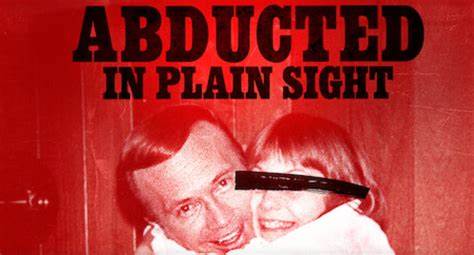
5. Abducted in Plain Sight (2017)
What It’s About: This jaw-dropping documentary tells the story of 12-year-old Jan Broberg, who was abducted—twice—by a trusted family friend.
Why It’s Disturbing: The manipulative tactics used by the abductor to gain the trust of the victim’s parents are almost more horrifying than the abductions themselves. It’s a shocking reminder of how predators can infiltrate even the most secure-seeming families.
Where to Watch: Netflix
6. The Keepers (2017)
What It’s About: This haunting Netflix series investigates the murder of Sister Cathy Cesnik, a beloved nun and teacher, and uncovers decades of abuse and corruption within the Catholic Church in Baltimore.
Why It’s Disturbing: The documentary doesn’t just focus on Sister Cathy’s murder but also reveals systemic cover-ups and the long-lasting trauma endured by survivors of abuse.
Where to Watch: Netflix
7. Night Stalker: The Hunt for a Serial Killer (2021)
What It’s About: This Netflix series recounts the harrowing crimes of Richard Ramirez, the “Night Stalker,” who terrorised Los Angeles in the 1980s with a string of brutal murders, assaults, and burglaries.
Why It’s Disturbing: The series takes viewers into the sheer fear that gripped an entire city, highlighting the randomness and brutality of Ramirez’s crimes and the relentless efforts of law enforcement to stop him.
Where to Watch: Netflix
8. Dear Zachary: A Letter to a Son About His Father (2008)
What It’s About: This heart-wrenching documentary was created as a tribute to Andrew Bagby, a young doctor who was murdered by his ex-girlfriend. The film takes a devastating turn when custody of Andrew’s son becomes part of the story.
Why It’s Disturbing: The emotional impact of this documentary is almost unbearable, as it lays bare the pain of losing a loved one while grappling with the failures of the justice system.
Where to Watch: Prime Video
9. The Trials of Gabriel Fernandez (2020)
What It’s About: This Netflix series examines the tragic and brutal death of 8-year-old Gabriel Fernandez, who was subjected to severe abuse by his mother and her boyfriend while child protective services failed to intervene.
Why It’s Disturbing: The documentary highlights systemic failures that allowed Gabriel’s suffering to continue, forcing viewers to confront the devastating consequences of neglect and bureaucratic inaction.
Where to Watch: Netflix
10. Conversations with a Killer: The Jeffrey Dahmer Tapes (2022)
What It’s About: This Netflix documentary provides chilling audio recordings of interviews with Jeffrey Dahmer, one of the most infamous serial killers in history, as he describes his gruesome crimes.
Why It’s Disturbing: Hearing Dahmer’s calm, matter-of-fact explanations of his actions offers an unsettling insight into his mindset, making his already infamous story even more haunting.
Where to Watch: Netflix
Conclusion
True crime documentaries captivate us because they force us to confront the darkest aspects of humanity, the failures of the systems meant to protect us, and the resilience of those who seek justice. The documentaries on this list are not for the faint-hearted—they are raw, real, and deeply disturbing, but they also offer a profound look into the human capacity for both evil and endurance.
Have you watched any of these documentaries? Which one left you most disturbed or compelled? Share your thoughts in the comments, and if you’re looking for more chilling stories, check out my book The Killer Next Door, which delves into the lives of ordinary people who committed extraordinary crimes.
In The Killer Next Door, I delve into the chilling stories of individuals who blended seamlessly into their communities, concealing their horrifying crimes behind facades of normalcy. These killers were trusted neighbours, friends, and family members who committed acts of unthinkable violence while hiding in plain sight. Here’s a closer look at four of the infamous killers featured in the book.
1. Ted Bundy: The Charming Sociopath
The Facade: Ted Bundy was the embodiment of charm and charisma. Handsome, intelligent, and seemingly kind, Bundy worked in politics, volunteered at a crisis hotline, and appeared to be a promising young professional. To many, he was the last person they’d suspect of any wrongdoing.
The Crimes: Behind his charming smile, Bundy was a cold-blooded serial killer who abducted, raped, and murdered at least 30 young women during the 1970s, although the true number of his victims may never be known. He used his good looks and a fake “injured man” act—pretending to need help with a cast or crutches—to lure women to their deaths. His crimes spanned several states, making him one of the most infamous serial killers in U.S. history.
Key Takeaway: Bundy’s story is a haunting reminder of how predators can exploit charm and trust to mask their true intentions.
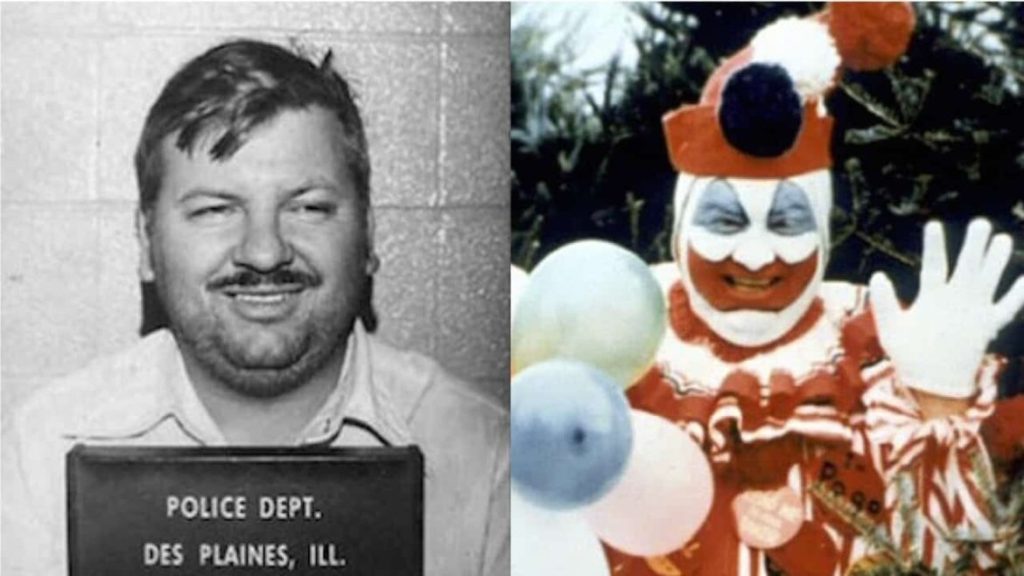
2. John Wayne Gacy: The Killer Clown
The Facade: John Wayne Gacy was a respected member of his community in suburban Chicago. He was a successful contractor, active in local politics, and even entertained children at events as “Pogo the Clown.” Gacy’s outward persona as a kind, community-focused man made his crimes all the more shocking.
The Crimes: Gacy was a sadistic predator who raped, tortured, and murdered at least 33 young men and boys between 1972 and 1978. Many of his victims were lured to his home under the guise of job opportunities, where he overpowered them before committing his heinous acts. Most of his victims were buried in the crawl space beneath his house, with others discarded in nearby rivers.
Key Takeaway: Gacy’s ability to maintain a respected public image while committing such horrific crimes reveals how truly deceptive predators can be.
3. Dennis Rader (BTK): The Family Man with a Dark Secret
The Facade: Dennis Rader was the picture of suburban normalcy. A church leader, father, husband, and compliance officer in Wichita, Kansas, he appeared to live a quiet and unremarkable life. Rader’s role as a community enforcer of local regulations further solidified his image as a responsible and upstanding citizen.
The Crimes: Rader was the BTK Killer, a self-given moniker that stood for “Bind, Torture, Kill.” Between 1974 and 1991, Rader terrorised the Wichita area, murdering 10 victims while sending taunting letters to the media and police. His crimes were meticulously planned, and his dual life allowed him to avoid suspicion for decades.
Key Takeaway: Rader’s story shows the terrifying reality that even those who seem trustworthy and dependable can harbour deadly secrets.
4. Nannie Doss: The Giggling Granny
The Facade: Nannie Doss was a sweet-looking, soft-spoken woman who often wore a warm smile. She presented herself as a devoted wife and grandmother, embodying the archetype of a loving, domestic caregiver. Her cheerful demeanour earned her the nickname “The Giggling Granny.”
The Crimes: Beneath her kindly exterior, Doss was a cold-blooded serial killer who murdered 11 people over several decades, including four of her husbands, two children, her sister, her mother, and a grandson. Her preferred method was poisoning, often using arsenic-laced food or drink. Doss’s motive was largely financial, as she collected life insurance payouts from her victims. She laughed and joked even during her confession, cementing her chilling nickname.
Key Takeaway: Doss’s crimes remind us that appearances can be deceiving, and even the most unassuming people can hide deadly intentions.
Conclusion
The killers featured in The Killer Next Door highlight a chilling truth: evil often hides in plain sight, taking on forms we least expect. Whether it’s the charming sociopath, the respected community leader, or the sweet grandmother, these individuals concealed their true natures behind masks of normalcy, earning trust while committing unthinkable acts.
By exploring their stories, The Killer Next Door sheds light on the psychology, methods, and lasting impact of these killers. It’s a haunting journey into the lives of those who seemed so ordinary yet carried out extraordinary evil.
Which of these killers do you find most unsettling? Share your thoughts in the comments below, and don’t forget to grab your copy of The Killer Next Door to uncover even more chilling details.
Jeffrey Dahmer, also known as the “Milwaukee Cannibal,” is one of the most infamous serial killers in American history. While many know the broad details of his gruesome crimes, some of the facts about his life and methods remain utterly chilling and surprising. Below are 10 disturbing facts that delve deeper into the twisted mind of Jeffrey Dahmer and his horrific actions.
1. He Started Killing at Just 18 Years Old
Jeffrey Dahmer’s descent into darkness began alarmingly early. In 1978, just weeks after graduating from high school, he committed his first murder. At the time, Dahmer was living alone in his family’s home in Bath, Ohio, after his parents had divorced and left the property to him temporarily. This period of isolation allowed his disturbing tendencies to surface unchecked.
His first victim, 19-year-old Steven Hicks, was hitchhiking to a concert when Dahmer picked him up. Offering a ride, Dahmer persuaded Hicks to come back to his house for drinks under the pretext of casual conversation and companionship. For a while, the interaction seemed harmless, as they drank and talked. However, when Hicks eventually decided it was time to leave, Dahmer panicked.
Terrified of being abandoned and desperate to keep Hicks with him, Dahmer grabbed a dumbbell and struck Hicks on the back of the head. He then strangled him to death, marking this as the beginning of his horrific killing spree.
What happened next set a gruesome precedent for Dahmer’s later crimes. Instead of reporting the incident or disposing of the body immediately, Dahmer acted on his growing compulsion to control and possess his victim. He dissected Hicks’ body, dissolved some of the remains in acid, and scattered the bones in the woods near his home. This meticulous disposal method foreshadowed the chilling methods Dahmer would refine in his future murders.
Despite committing such a heinous act, Dahmer didn’t kill again for nearly a decade. This “cooling-off period” is unusual for serial killers and suggests a mix of guilt, fear, and repression after his first crime. Nevertheless, the murder of Steven Hicks was a pivotal moment that revealed Dahmer’s capacity for violence and marked the first step in his transition into one of history’s most infamous serial killers.
2. He Kept Souvenirs from His Victims
One of the most horrifying aspects of Jeffrey Dahmer’s crimes was his obsessive need to keep mementoes of his victims. These “souvenirs” weren’t just ordinary items like photographs or belongings; Dahmer took things to an unfathomable level, preserving parts of his victims’ bodies to relive the murders and maintain a sense of connection to them.
Dahmer confessed to keeping skulls, bones, and even hearts from some of his victims. In many cases, he cleaned and bleached the bones to preserve them, arranging them in his apartment like grim trophies. For Dahmer, these body parts symbolised his attempt to hold on to the control and possession he craved, even after his victims were dead.
His apartment, when discovered by police, was a true house of horrors. Investigators found severed heads in his refrigerator, a collection of skulls painted and stored in a filing cabinet, and even a 57-gallon drum filled with acid used to dissolve bodies. Beyond this, police discovered a disturbing array of Polaroid photographs Dahmer had taken of his victims during various stages of dismemberment. These photos served as a chilling visual archive for Dahmer, allowing him to relive the crimes whenever he wanted.
Perhaps most disturbing was Dahmer’s intention to build a “shrine” using the body parts he preserved. He later described to investigators how he planned to construct an altar in his apartment, featuring a collection of skulls, candles, and photographs. The altar was meant to be a place where he could reflect on his victims and derive some twisted form of power or solace from their presence.
This macabre habit of keeping body parts and photographs demonstrates the depth of Dahmer’s compulsions and psychological detachment. Unlike many serial killers who try to distance themselves from their crimes, Dahmer immersed himself in the physical and emotional aftermath. These “souvenirs” weren’t just reminders; they were a way for him to maintain control and possession long after the murders had occurred.
The gruesome discovery of these preserved remains played a key role in cementing Dahmer’s infamy. It’s one thing to hear about the horrifying acts of a killer, but the tangible evidence of his crimes—his trophies and plans for a shrine—painted a chilling picture of a man completely detached from normal human empathy. These actions not only horrified the world but also provided a terrifying insight into the mind of one of history’s most disturbed criminals.
3. He Experimented with Cannibalism
Jeffrey Dahmer’s crimes were shocking on many levels, but his confession to practising cannibalism took the horror to an even darker place. Dahmer admitted to eating parts of several of his victims, explaining that he wanted to feel a deeper connection to them. For him, consuming his victims was not just a physical act—it was an attempt to make them “a part of him forever.”
Dahmer’s descent into cannibalism reportedly began as his compulsion to control his victims escalated. He described feeling an overwhelming need to keep his victims close, and when even preserving their body parts was not enough, he turned to eating their flesh. He later revealed in interviews that he consumed organs such as hearts, thighs, and biceps.
One particularly chilling detail was Dahmer’s admission of how he prepared the human flesh. He described cooking the body parts in a skillet, seasoning them with condiments like salt and pepper, and eating them as though they were a normal meal. This added an even more gruesome layer to his already horrifying crimes.
For Dahmer, cannibalism wasn’t solely about fulfilling a physical craving—it was psychological. He saw it as a way to possess his victims completely, absorbing them into himself in the most intimate and irreversible way. This disturbing behaviour also reflected his deep-rooted feelings of abandonment and loneliness. By consuming his victims, he believed they could never leave him, providing him with a perverse sense of comfort and control.
The discovery of Dahmer’s cannibalism horrified investigators, the public, and even seasoned professionals in the criminal justice system. During his trial, this revelation shocked the court and cemented Dahmer’s status as one of the most depraved killers in history. The media quickly labelled him “The Milwaukee Cannibal,” a name that would forever be associated with his horrific crimes.
What makes this aspect of Dahmer’s story even more terrifying is how he was able to carry out these acts in such an ordinary setting. Living in a small apartment in Milwaukee, Dahmer prepared these meals in the same space where he stored body parts and conducted his gruesome experiments. His neighbours were unaware of the atrocities happening just feet away, though some later reported foul smells and strange noises coming from his unit.
Cannibalism also served as a symbolic representation of Dahmer’s distorted view of relationships and his inability to connect with others in a normal, healthy way. Instead of building meaningful relationships, he sought to dominate, control, and ultimately consume the people he fixated on. This dark obsession drove him deeper into his compulsion, leading to increasingly depraved and inhumane acts.
Dahmer’s confession to cannibalism remains one of the most disturbing details of his case. It not only highlighted the depths of his depravity but also offered a chilling glimpse into the mind of a man whose need for control knew no bounds. For many, this aspect of his crimes symbolised the ultimate violation of humanity, further cementing Jeffrey Dahmer’s place as one of the most infamous serial killers in modern history.
4. He Conducted Disturbing “Experiments” on Victims
One of the most horrifying aspects of Jeffrey Dahmer’s crimes was the twisted “experiments” he conducted on some of his victims. These experiments were part of his warped attempts to create a “zombie-like” state in his victims—individuals who would be alive but completely under his control. Dahmer later revealed during interviews that this compulsion stemmed from his fear of abandonment and his desperate desire for companionship without resistance or rejection.
Dahmer’s experiments involved injecting various substances into the skulls and brains of his victims. He would drill small holes into their heads while they were still alive and then inject acid or boiling water into their brains. He believed that these substances could somehow damage or neutralise specific parts of the brain, essentially erasing their autonomy and turning them into compliant, docile companions. Tragically, all these attempts failed, and the victims either died instantly or endured excruciating suffering before succumbing to their injuries.
One particularly disturbing case involved 14-year-old Konerak Sinthasomphone, one of Dahmer’s youngest victims. Dahmer drilled a hole in Konerak’s skull and injected hydrochloric acid into his brain. Remarkably, the boy survived this initial assault and managed to escape Dahmer’s apartment. However, when police encountered the injured and disoriented Konerak, Dahmer convinced them that the boy was his intoxicated partner. The police escorted Konerak back to Dahmer’s apartment, where he was later killed after another failed “experiment.” This tragic incident is one of the most infamous examples of Dahmer’s manipulation and the failure of authorities to stop him sooner.
These experiments weren’t just about control—they were part of Dahmer’s twisted desire to keep his victims with him forever. He didn’t want them to be fully conscious, independent individuals who might leave or reject him. Instead, he sought to create living dolls—completely subservient, incapable of resistance, and entirely under his control. This delusion further underscores the deep-rooted loneliness and rejection that plagued Dahmer’s life and fuelled his heinous crimes.
Dahmer’s experiments were not conducted out of scientific curiosity or sadistic pleasure alone. They reflected his deeply pathological need to blur the lines between life and death, control and companionship. These acts of cruelty also reveal his complete lack of empathy for his victims, whom he viewed as objects to manipulate rather than human beings.
The physical evidence of these experiments shocked investigators. They found tools such as drills, syringes, and chemicals in Dahmer’s apartment, alongside detailed Polaroid photographs documenting his victims during and after the procedures. The photographs provided undeniable proof of the extent of Dahmer’s depravity and became critical evidence during his trial.
These experiments represent one of the most chilling elements of Dahmer’s crimes. They were not only acts of torture but also a horrifying reflection of his obsessive desire to control every aspect of his victims’ lives—and even their deaths. Dahmer’s failed attempts to create “zombies” of his victims highlight his profound psychological dysfunction and his descent into the depths of human depravity. Forensic psychologists studying his case often point to these experiments as evidence of his extreme detachment from reality and the humanity of others.
While Jeffrey Dahmer’s murders alone are enough to cement his place as one of history’s most notorious serial killers, his experiments add a uniquely horrifying dimension to his crimes. They underscore the deep psychological torment that drove his actions and the unimaginable suffering he inflicted on his victims.
5. His Apartment Was a House of Horrors
Jeffrey Dahmer’s apartment, located at 924 North 25th Street in Milwaukee, Wisconsin, became infamous as a literal house of horrors. By the time police uncovered his crimes in July 1991, the small one-bedroom unit had been transformed into a gruesome shrine to his depravity. What investigators found inside would shock even the most seasoned law enforcement officers and cement Dahmer’s place in history as one of the most chilling serial killers.
When Tracy Edwards, a potential victim, escaped Dahmer’s apartment and flagged down police, it marked the beginning of the end for Dahmer’s reign of terror. When officers arrived to investigate, they were initially drawn to the foul smell that permeated the apartment. Upon searching the premises, they discovered an unimaginable scene: body parts, tools of dismemberment, and evidence of cannibalism.
One of the most chilling discoveries was in the refrigerator, where police found a human head wrapped in plastic. Inside the freezer, investigators uncovered more severed body parts, including hearts, biceps, and other human remains, meticulously preserved. Dahmer later admitted to eating some of these parts, describing the act as a way to “keep his victims with him forever.”
In addition to the gruesome contents of the refrigerator and freezer, Dahmer’s apartment was littered with other macabre items. A 57-gallon drum filled with acid was found in the corner of the apartment, containing dissolved remains of several victims. This drum was part of Dahmer’s method for disposing of bodies, as he used chemicals to break down flesh and tissue, leaving behind only bones, which he would either pulverise or keep as trophies.
Perhaps most horrifying were the skulls and bones that Dahmer had cleaned and painted. Police discovered skulls arranged in a filing cabinet and bones displayed as though they were part of a sick collection. Dahmer later revealed that he had plans to build a shrine using the bones and skulls, complete with black curtains, candles, and photographs. This “shrine,” he explained, was meant to be a place of reflection and power, where he could honour his “work” and maintain a spiritual connection to his victims.
Photographs played a significant role in Dahmer’s twisted world. Investigators uncovered Polaroid pictures he had taken of his victims during various stages of dismemberment. These photos not only served as chilling evidence of his crimes but also allowed Dahmer to relive the murders whenever he wanted. For him, the photographs were a way to capture and preserve the sense of control he felt during the killings.
Despite the overwhelming evidence of his crimes, Dahmer’s apartment appeared unremarkable from the outside. Located in a low-income housing complex, it was just another ordinary unit in a neighbourhood where residents had no idea of the horrors occurring within its walls. Neighbours, however, had reported strange smells emanating from Dahmer’s apartment, as well as the sound of tools late at night. Unfortunately, these complaints were either dismissed or insufficiently investigated at the time.
The discovery of Dahmer’s apartment shocked not only the local community but also the world. Media outlets described it as a “house of horrors,” and photographs of the evidence seized became iconic symbols of his crimes. The apartment was eventually demolished in 1992, as the building’s management and residents wanted to erase the dark history associated with the property.
Dahmer’s apartment was more than just the scene of his crimes; it was a physical representation of his mind—a place where his dark fantasies were carried out and preserved. The meticulous way he organised and displayed the remains of his victims speaks to the depths of his depravity and his complete detachment from humanity. It serves as a stark reminder of the evil that can hide behind an unassuming exterior.
6. He Was Almost Caught Multiple Times
One of the most frustrating and tragic aspects of Jeffrey Dahmer’s case is how close he came to being caught multiple times—opportunities that could have saved lives if acted upon. Despite his escalating crimes and growing body count, Dahmer managed to evade capture through manipulation, luck, and systemic failures by law enforcement and those around him. His ability to avoid arrest until 1991 highlights a haunting “what if” scenario in true crime history.
One of the most infamous incidents occurred in May 1991, just two months before Dahmer was finally caught. A 14-year-old boy named Konerak Sinthasomphone managed to escape from Dahmer’s apartment after being drugged and subjected to Dahmer’s horrifying experiments. Dahmer had drilled a hole in the boy’s skull and injected hydrochloric acid into his brain in an attempt to create a “zombie-like” state of submission. Despite this, Konerak regained some awareness and fled the apartment, wandering the streets naked, bleeding, and disoriented.
Neighbours who saw Konerak in distress called the police, and two officers arrived on the scene. However, when Dahmer caught up with them, he managed to convince the officers that Konerak was his 19-year-old boyfriend who had simply had too much to drink after a lover’s quarrel. Shockingly, despite protests from the neighbours, the police believed Dahmer’s story and escorted the boy back to his apartment. Within hours, Konerak was killed and dismembered. This incident is one of the most glaring examples of negligence in the case, as it demonstrated how Dahmer was able to manipulate authority figures and exploit stereotypes about relationships and sexuality.
This wasn’t the only time Dahmer narrowly avoided detection. In 1988, Dahmer was living with his grandmother in West Allis, Wisconsin, after being forced to leave his previous residence due to complaints of foul smells and strange behaviour. During this time, Dahmer was arrested for sexually assaulting a 13-year-old boy, for which he was convicted. However, he was sentenced to only one year of work release and five years of probation. This leniency in sentencing allowed Dahmer to continue his killing spree shortly after his release.
Even earlier, in 1981, Dahmer was honourably discharged from the U.S. Army after his excessive drinking made him unsuitable for military service. While serving in the military in Germany, some believe he may have committed murders, although these claims remain unproven. After his discharge, Dahmer returned to Ohio, where he resumed his destructive behaviour, including his first recorded murder in 1978.
Another near-miss occurred in 1990 when neighbours in Dahmer’s Milwaukee apartment complex complained multiple times about the foul odours emanating from his unit. Dahmer explained the smell as spoiled meat in his refrigerator or bad plumbing, and these excuses were accepted without further investigation. The stench was actually the result of decomposing bodies, but authorities never conducted a thorough search of his apartment during this period.
Dahmer’s ability to avoid detection can also be attributed to systemic failures in law enforcement. For example, many of his victims were gay men or people of colour, demographics that were often marginalised and overlooked by police at the time. Dahmer exploited these biases, knowing that complaints from neighbours or the disappearance of his victims might not be taken as seriously as they should have been.
The fact that Dahmer was able to continue his killing spree for so long, despite so many close calls, is a chilling reminder of the consequences of neglect, prejudice, and missed opportunities. By the time he was finally caught in July 1991—when Tracy Edwards escaped and led police back to Dahmer’s apartment—17 men and boys had lost their lives.
The near-captures in Dahmer’s case are haunting not only for the victims who might have been saved but also for the many people who crossed paths with him and felt something was wrong but couldn’t stop him. His ability to manipulate others and exploit cracks in the system remains one of the most tragic aspects of his story, highlighting how evil can thrive when warning signs are ignored.
7. He Was Dishonorably Discharged from the Army
Jeffrey Dahmer’s brief stint in the United States Army was a crucial, yet often overlooked, chapter of his life. While he initially appeared to have the potential for a structured and disciplined life, his problems with alcohol ultimately led to his discharge and marked the beginning of his deeper descent into violence and depravity.
In January 1979, Dahmer enlisted in the U.S. Army at the age of 18. This decision came after a period of aimlessness following his high school graduation and his first murder, Steven Hicks. His father, Lionel Dahmer, had encouraged him to join the military, hoping it would provide him with structure, discipline, and a path toward a productive life. Dahmer trained as a medical specialist at Fort Sam Houston in Texas, where he excelled in learning medical procedures and emergency care. This training later played a disturbing role in his crimes, as Dahmer applied the skills he had learned to his victims.
Dahmer was eventually stationed in Baumholder, West Germany, where he served as a combat medic. While stationed there, he initially performed his duties well, but his issues with alcohol quickly spiralled out of control. His excessive drinking alienated him from his fellow soldiers and impaired his ability to fulfil his responsibilities. His alcohol dependence became so severe that his superiors deemed him unsuitable for military service.
In March 1981, after just over two years in the Army, Dahmer was honourably discharged due to his alcohol problems. The discharge was classified as “honourable” because his conduct while sober was satisfactory, and his alcohol dependence was not considered a punishable offence at the time. However, his behaviour had already left a negative impression on some of his fellow soldiers.
Years after Dahmer’s crimes came to light, two men who served with him in the Army came forward with troubling allegations. One claimed that Dahmer had sexually assaulted him during their time stationed in Germany, while another alleged he had been the target of repeated harassment and assaults. Although these accusations could not be verified, they offer a disturbing insight into the potential escalation of Dahmer’s predatory tendencies during his time in the military.
After his discharge, Dahmer returned to the United States and briefly lived in Florida before moving back to Ohio to live with his father. This transition marked a significant turning point in his life. Without the structure of the military or a stable environment, Dahmer’s drinking worsened, and he became increasingly isolated. It wasn’t long before he began committing the crimes that would later define him as one of history’s most notorious serial killers.
The skills Dahmer learned in the Army, particularly as a medical specialist, played a sinister role in his later crimes. His knowledge of anatomy and medical procedures gave him the ability to dismember his victims with precision, and his familiarity with various substances may have influenced his experiments involving the injection of acid or boiling water into the brains of his victims. This blending of his military training with his dark compulsions underscores the chilling evolution of his criminal behaviour.
Dahmer’s time in the Army also provides insight into his inability to conform to societal expectations or maintain relationships. His discharge symbolised another failed attempt to find stability in his life. The lack of structure and direction after his dismissal left Dahmer adrift, allowing his darkest impulses to take hold and escalate into the horrific crimes he would commit over the next decade.
The story of Dahmer’s military service adds a haunting layer to his life. While it offered a brief glimpse of potential, his inability to overcome his personal demons, particularly his alcoholism, ultimately led him further down the path of destruction. It’s a stark reminder that even with opportunities for redemption, the deep-seated issues that drive individuals like Dahmer can remain unchecked, with devastating consequences.
8. Alcohol Was Central to His Crimes
Jeffrey Dahmer’s dependence on alcohol was a defining feature of his life and played a crucial role in his crimes. From his teenage years to his eventual arrest, alcohol served as both a coping mechanism for his inner demons and a tool he used to carry out his horrific acts. Dahmer’s relationship with alcohol not only fuelled his downward spiral but also blurred the lines between his compulsions and his sense of morality.
Dahmer began drinking heavily in high school, where he was often seen as the class clown, performing bizarre pranks and antics to entertain his peers. However, these behaviours masked a deep sense of alienation and a growing awareness of his dark fantasies. Alcohol became a way for him to numb his feelings of rejection, loneliness, and shame about his emerging desires. By the time he graduated, Dahmer was drinking so heavily that he would show up to class intoxicated and even carried alcohol in his school bag.
Alcohol’s role in Dahmer’s life escalated after his first murder in 1978. Killing Steven Hicks left Dahmer deeply shaken, and he turned to alcohol as a way to suppress his guilt and anxiety. For nearly a decade after that first murder, Dahmer did not kill again, but his reliance on alcohol worsened, contributing to his growing sense of detachment from reality. His drinking also caused significant issues in other areas of his life, such as his brief stint in the Army, where his excessive alcohol consumption led to his eventual discharge.
By the time Dahmer moved to Milwaukee in the late 1980s, alcohol had become an essential part of his criminal routine. He used it to lower his own inhibitions and to incapacitate his victims. Dahmer would frequent gay bars, bathhouses, and clubs, often choosing his victims based on their willingness to drink with him. He would charm them into returning to his apartment by offering alcohol, drugs, or promises of companionship. Once there, he would lace their drinks with sedatives, rendering them unconscious and unable to resist.
One of the most chilling aspects of Dahmer’s use of alcohol was how it allowed him to manipulate and control his victims. His routine was disturbingly calculated: he would drug their drinks, render them unconscious, and then carry out his horrific acts. For Dahmer, alcohol served as a means to disarm his victims both physically and emotionally, making them more vulnerable to his predatory behaviour.
Dahmer’s reliance on alcohol also played a role in his ability to maintain a façade of normalcy. While neighbours and acquaintances noted his odd behaviour, many attributed his actions to excessive drinking rather than suspecting something more sinister. For example, when neighbours complained about foul smells emanating from his apartment, Dahmer would often attribute the odour to spoiled food or a malfunctioning refrigerator, all while reeking of alcohol to support his excuses.
Alcohol not only facilitated Dahmer’s crimes but also seemed to amplify his detachment from reality. He later admitted during interviews that he often drank to the point of blacking out, claiming he sometimes struggled to recall specific details of his crimes. However, this may have been more of an excuse than a reflection of the truth, as Dahmer also meticulously documented his murders through Polaroid photographs, which suggests a high degree of awareness and control.
Dahmer’s dependence on alcohol was also evident during his arrest and trial. When Tracy Edwards escaped from Dahmer’s apartment in July 1991 and alerted the police, officers noted that Dahmer was visibly intoxicated when they arrived. Even as they discovered the horrors inside his apartment, Dahmer’s demeanour was eerily calm, possibly numbed by years of drinking to suppress his emotions.
The role of alcohol in Dahmer’s life and crimes underscores the complex interplay between his addiction, his psychological issues, and his violent compulsions. While alcohol may have provided temporary relief from his feelings of isolation and guilt, it also became a key tool that enabled him to carry out his horrific acts. Forensic psychologists have often noted that Dahmer’s dependence on alcohol highlights his inability to cope with reality, further exacerbating his descent into one of the most infamous killing sprees in history.
9. He Showed Warning Signs as a Child
Long before Jeffrey Dahmer became one of the most notorious serial killers in history, there were chilling warning signs in his childhood that hinted at his dark future. Dahmer’s early years were marked by behaviours and experiences that, in retrospect, fit a troubling pattern often associated with violent offenders. These signs, though concerning at the time, were largely overlooked or dismissed by those around him, allowing his sinister tendencies to fester and grow.
One of the most alarming early behaviours exhibited by Dahmer was his fascination with dead animals. As a young boy, he would collect animal carcasses from the woods near his home in Bath, Ohio. Dahmer would dissect these animals, studying their bones and internal organs with a morbid curiosity. He kept these remains in jars and was particularly fascinated with their structure, often describing how he would bleach their bones to preserve them. While many children show curiosity about the natural world, Dahmer’s interest was far from normal, as it focused on death, dismemberment, and decay rather than life.
This fascination with dissecting animals escalated over time. Dahmer’s father, Lionel, once noted that his son’s interest in anatomy seemed to grow after they removed the carcass of a dead animal from beneath their home. Rather than being disturbed by the sight, young Dahmer appeared intrigued, particularly by the sound of bones being removed. Lionel, a chemist, initially saw this as scientific curiosity and even encouraged his son’s interest in biology, not realising the dark path it might lead to.
Dahmer’s childhood also showed other signs of social and emotional struggles. By the time he reached elementary school, he was becoming increasingly withdrawn. He was described by teachers as quiet, shy, and lacking in self-confidence. His classmates often viewed him as an outsider, and he struggled to form meaningful friendships. As he grew older, Dahmer’s isolation deepened. By high school, he was spending most of his time alone, retreating into his private world of dark thoughts and fantasies.
One of the most notable indicators of Dahmer’s troubled psyche was his increasing reliance on alcohol, which began during his teenage years. He started drinking heavily while still in high school, often bringing beer or hard liquor to class in a concealed container. Dahmer’s drinking wasn’t just social or recreational; it became a way for him to escape his feelings of loneliness, rejection, and the confusion surrounding his emerging sexual desires. His classmates often found his antics—such as acting drunk or pretending to have seizures—bizarre and entertaining, but they didn’t understand the deeper turmoil behind them.
Another red flag was Dahmer’s lack of empathy, which became apparent in his interactions with others. While many of his classmates considered him quirky or eccentric, there were times when his behaviour crossed into disturbing territory. He had a penchant for making others uncomfortable and enjoyed testing boundaries, though it wasn’t enough to draw serious concern at the time. Dahmer also began developing violent sexual fantasies during his teenage years, which would later form the foundation of his horrific crimes.
Despite these warning signs, Dahmer’s family, teachers, and peers didn’t recognise the severity of his psychological issues. His parents’ tumultuous marriage and eventual divorce further compounded his feelings of abandonment and isolation. By the time his family moved to a new home and left him behind in their old house after high school, Dahmer’s detachment from reality had become deeply entrenched.
Psychologists often look back at Dahmer’s childhood as a case study in missed opportunities for intervention. Many of his behaviours align with the so-called “Macdonald Triad,” a set of traits often associated with violent offenders: cruelty to animals, fire-setting, and bed-wetting. While Dahmer didn’t exhibit all three traits, his fascination with dissecting animals and his lack of empathy were significant indicators of his psychological instability.
The signs of Dahmer’s troubled mind were there, but they went unnoticed or were dismissed as harmless eccentricities. His isolation, fascination with death, and growing reliance on alcohol laid the groundwork for his later crimes. These early warning signs highlight the importance of recognising and addressing troubling behaviour before it escalates into something far more dangerous. Unfortunately, in Dahmer’s case, these red flags were ignored, and his dark fantasies grew unchecked, leading to the horrifying crimes that shocked the world.
10. His Capture Was Pure Luck
Jeffrey Dahmer’s reign of terror came to an end on July 22, 1991, and the circumstances of his capture were nothing short of a stroke of luck. For over a decade, Dahmer had lured unsuspecting victims to his home, drugged them, and carried out his horrific acts without detection. However, on that fateful summer evening, one man’s courage and quick thinking finally exposed the monstrous reality of Dahmer’s crimes and brought an end to his killing spree.
The man who escaped Dahmer’s grasp that evening was Tracy Edwards, a 32-year-old who had been invited back to Dahmer’s apartment under the promise of drinking and hanging out. Like many of Dahmer’s victims, Edwards was lured by the killer’s charm and seemingly harmless demeanour. However, once inside the apartment, it quickly became clear that something was very wrong.
Edwards immediately noticed the foul odour emanating from the apartment, a smell that Dahmer blamed on spoiled meat. The place was cluttered and unsettling, with a large 57-gallon drum sitting ominously in the corner. Dahmer tried to ease the tension by offering Edwards a drink, which, as always, was spiked with sedatives. As Dahmer attempted to handcuff Edwards, the victim realised the danger he was in and began looking for an opportunity to escape.
During his time in the apartment, Edwards observed Dahmer’s increasingly erratic behaviour. At one point, Dahmer brandished a knife and pressed it against Edwards’ chest. He then forced Edwards to sit with him on the floor, where he watched TV and muttered incomprehensible things about power and control. Dahmer placed his head on Edwards’ chest as though listening to his heartbeat and said chillingly, “I’m going to eat your heart.” These moments of horror drove Edwards to remain calm and try to outsmart his captor.
Edwards seized an opportunity when Dahmer became distracted. He asked to use the bathroom and, while pretending to comply with Dahmer’s demands, waited for the right moment to make a move. Seeing his chance, Edwards struck Dahmer and ran for the door. Despite being partially handcuffed, Edwards managed to escape the apartment and flag down two police officers patrolling the area.
When Edwards led the officers back to Dahmer’s apartment, what they found inside shocked them to their core. Upon entering the residence, they immediately noticed the overpowering smell of decomposition. A search of the apartment uncovered a drawer filled with Polaroid photographs of dismembered bodies, which Dahmer had meticulously taken at various stages of his gruesome process. These photos served as undeniable evidence that Edwards’ story was true.
As the search continued, the full scope of Dahmer’s crimes began to unfold. Police discovered severed heads in the refrigerator and freezer, human remains stored in containers, and bones arranged like trophies. A 57-gallon drum in the corner of the apartment contained decomposing body parts submerged in acid. The apartment was a macabre archive of death, with tools of dismemberment and evidence of cannibalism scattered throughout.
The officers immediately arrested Dahmer, and during his interrogation, he confessed to the murders of 17 young men and boys over the course of 13 years. Dahmer’s calm and detailed confession shocked investigators. He openly described how he had lured, drugged, and murdered his victims, and admitted to acts of cannibalism and necrophilia. His unflinching honesty about his crimes added another layer of horror to an already unimaginable case.
Dahmer’s capture was pure luck in many ways. Without Tracy Edwards’ courage and presence of mind, Dahmer might have continued his killing spree. Prior to this event, he had managed to evade detection despite close calls, including an incident where police returned a drugged and injured victim, Konerak Sinthasomphone, to Dahmer’s custody. The fact that his crimes went on for so long highlights systemic failures in law enforcement and society’s tendency to overlook certain victims, particularly gay men and people of colour.
The circumstances of Dahmer’s capture also emphasise the randomness of justice in his case. It was a combination of Edwards’ bravery, a moment of distraction on Dahmer’s part, and the fortunate timing of nearby police officers that ultimately led to his arrest. Without these factors, Dahmer’s horrific crimes might have continued unchecked.
Dahmer’s capture marked the end of one of the most disturbing chapters in modern criminal history. The details revealed during the investigation and trial shocked the world and left an indelible mark on how society views serial killers and the systems that fail to stop them. It’s chilling to think that if Tracy Edwards had not escaped that night, Dahmer might have continued his gruesome killing spree for much longer. His capture was a turning point, not only in his story but also in the broader conversation about law enforcement, victimology, and the nature of evil.
The story of Jeffrey Dahmer remains one of the most chilling and disturbing cases in modern true crime history. His ability to blend into society, manipulate those around him, and evade capture for over a decade reveals the terrifying reality that evil can often hide in plain sight. From his troubling childhood and reliance on alcohol to the horrifying discoveries in his apartment, Dahmer’s life is a grim reminder of the warning signs that were missed and the devastating consequences of unchecked darkness.
While his crimes shocked the world, they also forced society to confront uncomfortable questions about justice, policing, and the ways certain victims are overlooked. Dahmer’s capture was a stroke of luck, but it came far too late for the 17 young men and boys who lost their lives to his depravity. Their stories deserve to be remembered—not just as victims, but as individuals whose lives were cut tragically short.
If you want to explore more about the psychology, methods, and chilling realities of infamous killers like Jeffrey Dahmer, my book The Killer Next Door delves deep into the minds of history’s most manipulative and dangerous individuals. It’s a journey into the darkest corners of human nature—one that will leave you questioning how well we really know the people around us.
What do you think is the most disturbing aspect of Jeffrey Dahmer’s story? Share your thoughts in the comments below, and let’s keep the conversation going. Together, we can shed light on the stories that must never be forgotten.























 K Eleanor | Author