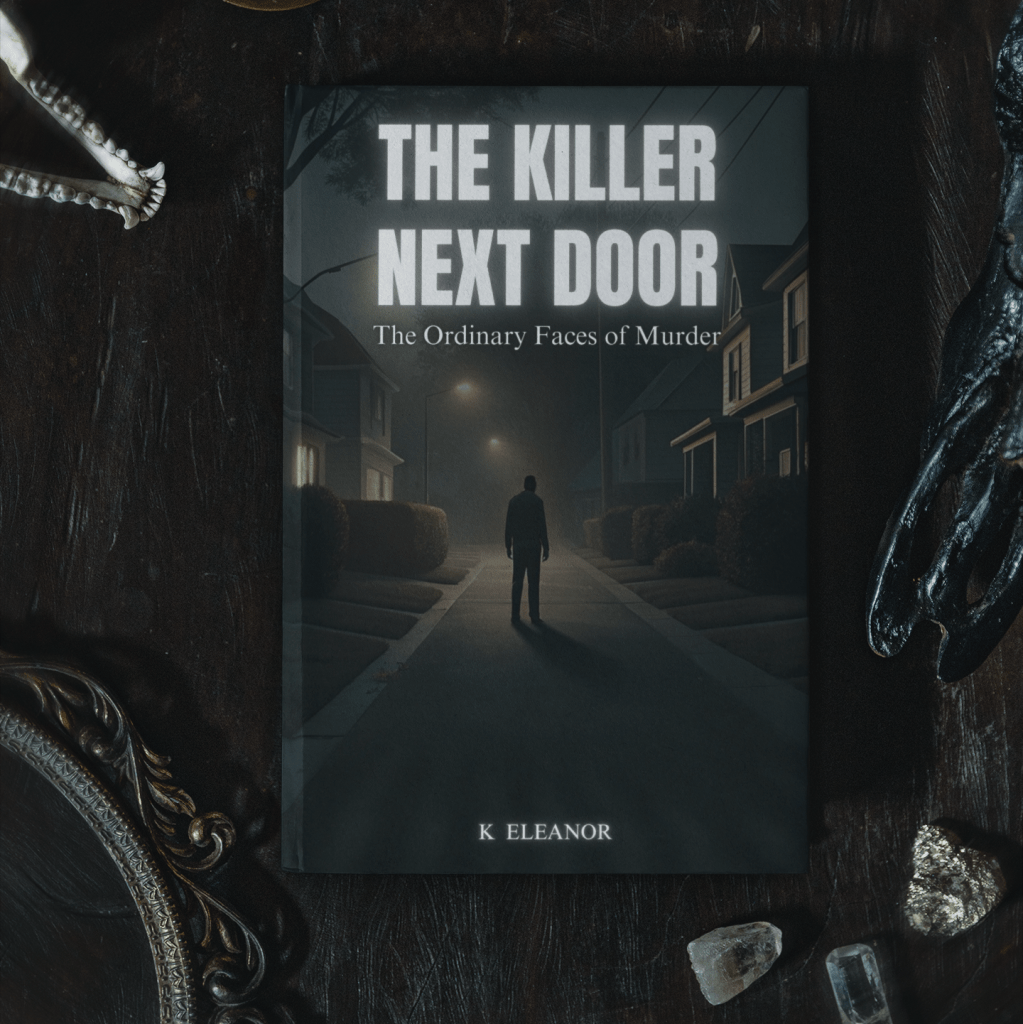

Writing The Killer Next Door…
It wasn’t just about retelling the chilling stories of infamous killers; it was about diving deep into the minds of people who hid their darkness behind a facade of normalcy. To do this, I embarked on an extensive research journey that involved documentaries, interviews, archival records, and even psychological studies. Here’s a behind-the-scenes look at how I brought these stories to life.
1. Documentaries: Visual Storytelling with a Chilling Edge
Documentaries were a critical part of my research process, offering first-hand insights and chilling footage that brought these cases to life. Films like Conversations with a Killer: The Ted Bundy Tapes provided invaluable perspectives, not just on the killers themselves, but also on how society responded to their crimes.
Watching these documentaries allowed me to study the killers’ behaviours, mannerisms, and even their interviews, helping me understand how they manipulated the people around them. For example, seeing Ted Bundy’s charm and confidence in courtroom footage was crucial in painting a picture of how he blended into society while committing horrific acts.
I also turned to lesser-known documentaries that explored specific aspects of true crime, such as the psychology of manipulation and how killers develop their methods over time. These visual resources added depth to my narrative, ensuring that the stories in The Killer Next Door weren’t just factual but also emotionally resonant.
2. First-Hand Interviews and Case Studies
One of the most powerful research tools I used was speaking directly to individuals with expertise or experiences related to these cases. I reached out to criminologists, forensic psychologists, and even retired law enforcement officers who had worked on high-profile murder cases. Their insights helped me understand the complexities of criminal behaviour, from how killers choose their victims to how they evade detection for so long.
A conversation with a retired detective, for instance, gave me a detailed look into the painstaking work involved in connecting the dots in serial murder cases. This inspired a section of the book where I explore how law enforcement struggled to piece together the patterns of killers like BTK and John Wayne Gacy.
Additionally, I studied case files and victim impact statements, which provided invaluable insight into how these crimes affected not just the immediate victims but also their families and communities. By focusing on these human elements, I aimed to ensure that my book didn’t glorify the killers but instead gave a voice to those whose lives were forever changed.
3. Archival Research: Unearthing Hidden Details
Archival records were another essential part of my research process. I combed through court transcripts, police reports, and newspaper articles from the time of the crimes to gather a clear picture of how these cases unfolded. The archives were a goldmine of information, revealing overlooked details that didn’t always make it into documentaries or public discourse.
For example, while researching John Wayne Gacy, I found chilling details about how his community viewed him before his crimes were discovered. Descriptions of him as a friendly neighbour and active community member were jarringly juxtaposed with the horrors that were later uncovered in his home. These records added nuance to the narrative, highlighting the contrast between his public persona and his private monstrosity.
Newspaper archives also allowed me to see how the media portrayed these killers at the time, offering insight into how public perception evolved. Headlines from the 1970s and 1980s often focused on the shocking nature of the crimes, while more recent articles explored the psychological profiles of these individuals. This dual perspective allowed me to weave together a narrative that felt both historical and modern.
4. Psychological Studies and Academic Research
Understanding the psychology of killers like Ted Bundy and BTK was crucial for this book. I delved into academic papers, psychological profiles, and criminal studies that explored topics like narcissism, sociopathy, and psychopathy. These resources helped me unpack the minds of these individuals and explain why they acted the way they did.
For instance, I explored theories like the “Macdonald Triad” (childhood signs linked to violent tendencies) and how childhood trauma or neglect can play a role in shaping a killer’s psyche. These insights helped me go beyond simply recounting their crimes; I wanted to explore why they committed these acts and what makes their behaviour so terrifyingly human.
5. True Crime Literature and Memoirs
Books by investigators, journalists, and even survivors played a significant role in my research. Titles like The Stranger Beside Me by Ann Rule and Mindhunter by John Douglas provided detailed accounts of serial killers’ behaviour and the challenges of investigating such cases.
Memoirs from victims’ families or survivors offered a poignant perspective that grounded my research in humanity. These personal accounts helped ensure that my narrative didn’t solely focus on the killers but also honoured the lives of those affected by their actions.
Conclusion
The research behind The Killer Next Door was both a harrowing and enlightening experience. It required diving into the darkest corners of human behaviour while remaining grounded in the reality of the victims’ stories. By combining documentaries, interviews, archival research, psychological studies, and first-hand exploration, I aimed to create a book that doesn’t just recount the facts but also delves into the complex and unsettling truths behind these crimes.
Researching for this book reminded me of one chilling truth: evil often hides in plain sight, and the people we think we know may not be who they appear to be. Through The Killer Next Door, I hope to share these stories in a way that educates, provokes thought, and ensures that the victims are never forgotten.
Have you ever wondered what it takes to uncover the truth behind such dark stories? Let me know your thoughts or questions in the comments—I’d love to share more about the process!

 K Eleanor | Author
Leave a comment